The Spiritual Significance of Navaratri
The nine nights of Navaratri are a time of religious observance—a time for prayers to purify the mind, remove ignorance, and awaken right knowledge. The tenth day, Vijayadashami, celebrates victory and new beginnings. The worship of Goddess Jagat Janani in Her many forms—as femininity, childhood, girlhood, youth, and motherhood—is connected to the primordial power of the Mother, the substratum of the universe. 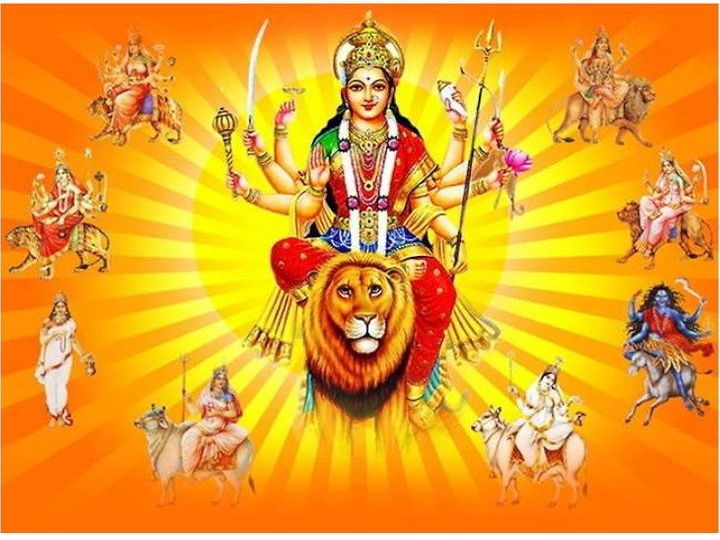 Without knowledge, human beings can become like animals. Maha Saraswati, the Divine Educator, is the embodiment of all art and knowledge. Vidya, or sacred knowledge, is worshiped during Navaratri. Seekers of knowledge worship the Goddess with fasting and devotion, especially on Mahanavami. Durgashtami, Mahanavami, and Vijayadashami are the three most important days in the worship of the Goddess of Vidya. During Navaratri, devotees worship their books, tools, instruments, and all means of learning and work with devotion.
At one level, Navaratri signifies the progress of a spiritual aspirant. The mind is purified through yajna, or ritual sacrifice. Without this knowledge, human beings become like animals. Negative tendencies such as sloth, lust, anger, pride, envy, and impatience are obstacles to spiritual practice. Conquering them through penance and attaining spiritual fulfillment—this is the principle of Navaratri. Through prayer, one gains power, auspiciousness, and knowledge. Through vows, we increase our willpower and gain greater self-control. Vijayadashami marks the successful completion of this sacred observance.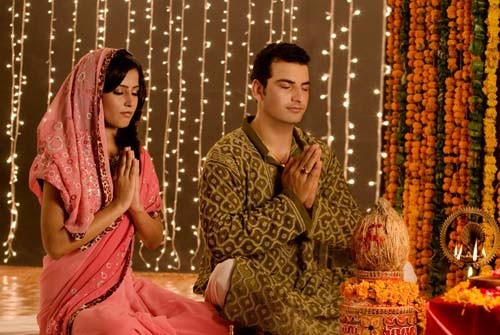
The spiritual aspirant passes through three stages, personified by Durga, Lakshmi, and Saraswati, before entering the realm of infinite realization of the Self. The significance of each stage of worship has clear parallels in the different stages of sadhana, or spiritual practice. First, negative tendencies need to be controlled. Second, virtues need to be ingrained. Third, after gaining the necessary mental purity, spiritual knowledge needs to be acquired. Only then will the spiritual aspirant attain spiritual illumination.
Navaratri is important not only for spiritual aspirants but also for those who lead a worldly life. All may invoke Durga’s help to overcome obstacles, pray to Lakshmi for peace and prosperity, and contemplate on Saraswati for knowledge. Thus, we invoke the Shakti, or divine power, that is within us. Durga, Lakshmi, and Saraswati are not different deities but facets of the one Divinity.
We have the freedom to worship God in any form we like. We can worship God as Mother, Father, Guru, Friend, Lord, or even as our own child. Among human relationships, the one between mother and child is the highest. The child has total freedom with his mother. He gets what he wants by crying or through willfulness. Even if the mother spanks him, he will hold on to her tightly. “I have no other refuge than her”—this is his attitude.
No matter what the cause of his distress, he finds consolation in his mother’s lap. This is the attitude we should have toward God. The mother is the embodiment of patience. No matter how many times the child errs, she forgives him and showers her affection on him. While most mothers have such love only for their own children, the Divine Mother loves all and guides them through spiritual discipline.